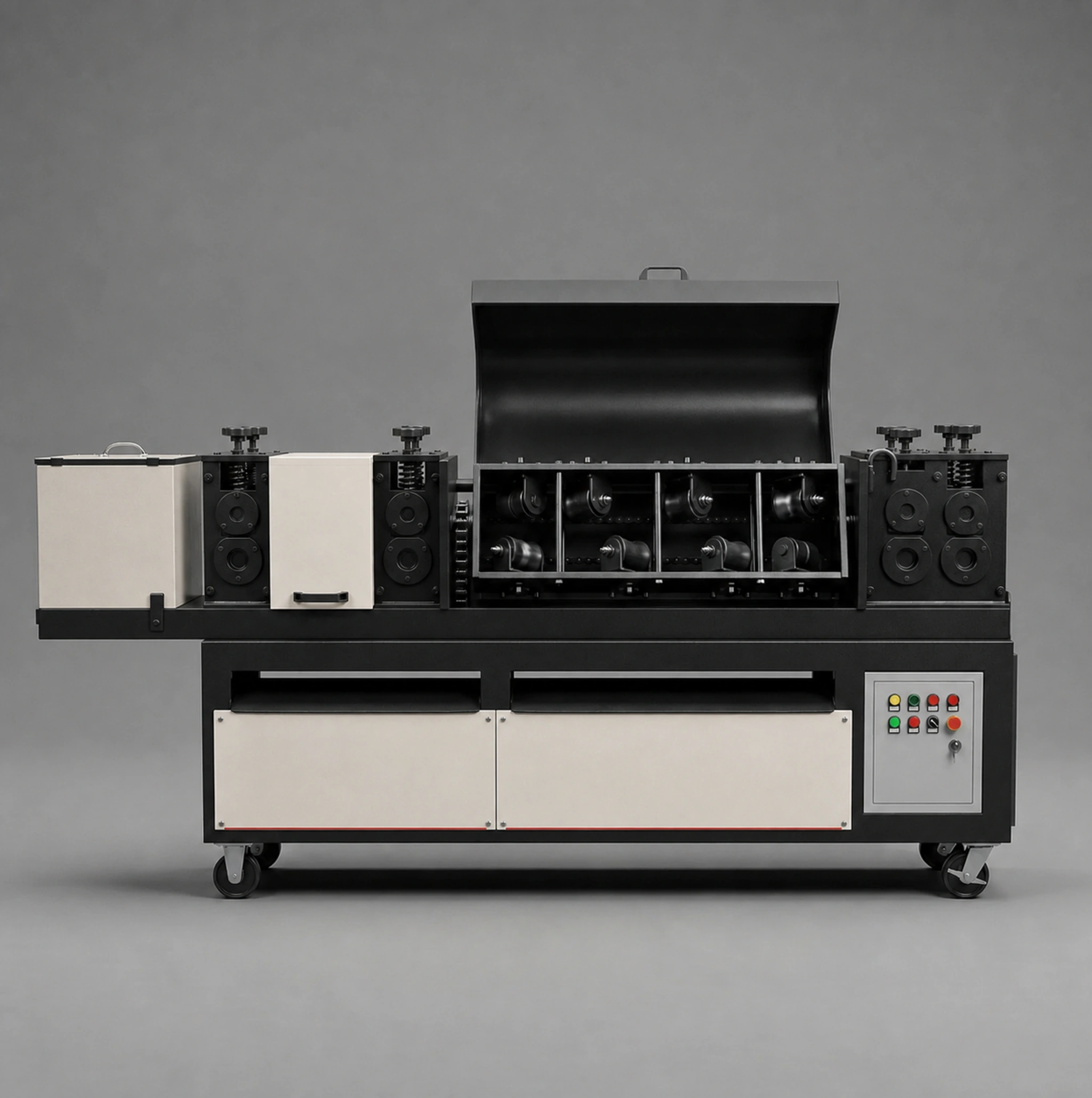
Professional steel pipe straightening equipment with integrated straightening and painting functions. Multi-roller straightening principle effectively eliminates pipe bending deformation, restoring linear accuracy. Widely used for construction scaffolding and guardrail pipe recycling.
Straightening and painting integrated, doubled efficiency
Primarily used for construction scaffold tube, guardrail tube and reclaimed steel pipe. Multi-roll straightening can correct bends caused by transport, welding or service, preparing the pipe for cutting, coating, inspection or reuse with more consistent straightness.
Construction Scaffolding
Guardrail Pipe
Used Pipe Reprocessing
Customization Scope
Roll quantity, roll profile, adjustment method and feed speed can be selected according to diameter, wall thickness, length, initial bend and target straightness. For integrated painting, the coating type, coverage, drying method and loading arrangement must also be confirmed.
Pipe Processing / Straightening
How the Machine Works
The tube passes continuously through staggered rolls and is repeatedly bent in multiple directions to correct straightness. Roll profile, pressure and feed speed are adjusted for diameter, wall thickness, initial bend and surface condition.
Inputs Required for Selection
Incoming section, diameter or side size, wall thickness and length
Material grade, weld-seam position and incoming surface condition
Target end dimensions, formed length, finish and mating relationship
Tolerance, inspection method and required retained samples
Planned output, handling method, electrical supply and floor space
Configuration Options to Review
Workpiece-specific dies, positioning and support
Manual, semi-automatic or linked controls
Feeding, receiving and line integration
Local voltage, guarding and operator interface
Sample trials and parameter records for special parts
Trials and Acceptance
Inspect fasteners, lubrication, hydraulics, electrics and safety devices
Check no-load movement, control logic and emergency stops
Run material trials with the agreed workpiece
Measure critical dimensions and finish against drawings or samples
Confirm trial records, packing list and supplied information
Before Delivery and Installation
Confirm machine size, weight, unloading route and installation position
Prepare the specified power supply, foundation and working clearance
Check the main machine, dies, accessories and documents against the packing list
Complete safety and no-load checks before the first production trial
Maintenance Priorities
Check lubrication, hydraulic oil and fasteners according to the maintenance information
Remove debris and dust from dies, rolls or finishing zones
Record common settings, unusual noise, alarms and workpiece changes
Match machine identity, specification and photos before ordering a replacement
Frequently Asked Questions
Is a straightened tube automatically safe to reuse?
No. Straightening does not remove cracks, severe corrosion, crushing or material weakening; applicable inspection is still required.
Why do different bends need different settings?
Initial curvature, wall thickness, material and surface condition change the required roll pressure and feed.
✓
Success.
Thank you for your inquiry! Your request has been received.
Our engineering sales team will contact you within 24 hours.
⚠
Send Failed.
Sorry, there was a problem submitting your inquiry. You can try again, or contact us directly using the information below:
Please fill out the form with your requirements. Our engineering sales team will review your application and provide a detailed quotation for the selected machinery.