
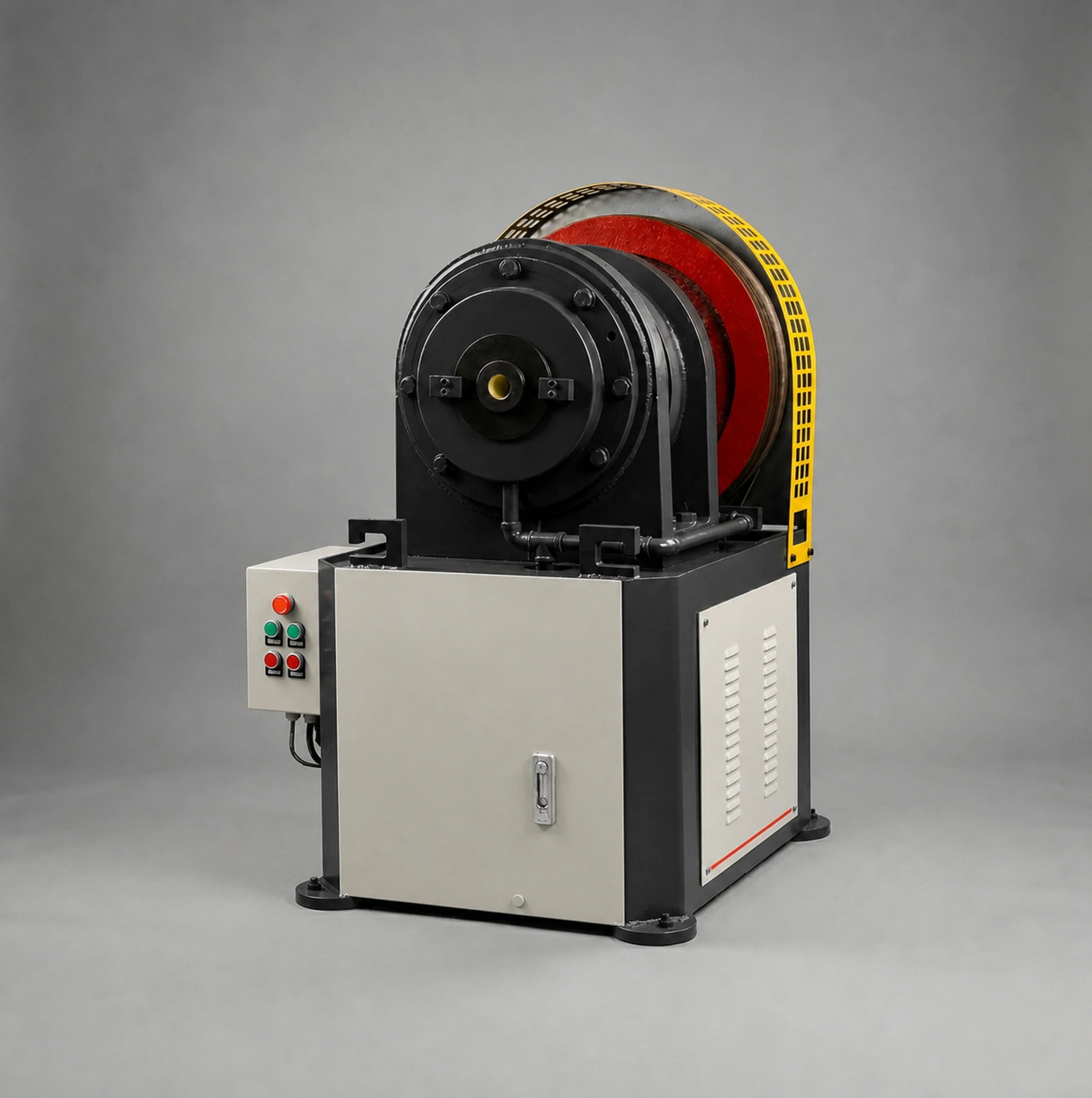
FIG. 07 — Taper Tube Swager
Taper Tube Swaging Machine
Tube Processing / Swaging

Taper Tube Swaging Machine

Professional taper tube forming equipment for one-step conical tube processing. Ideal for furniture legs, tent poles, and umbrella shafts. Adjustable taper angle with high processing precision.

  • Adjustable taper angle, wide range
  • One-step forming, high efficiency
  • Smooth surface finish, no scratches
  • Suitable tube diameter φ20-φ80mm

Technical Specifications

Mechanical Properties

Tube Diameter Range φ20-80mm
Taper Angle Range 1-15°
Max Taper Length 1500mm
Processing Speed 2-8m/min
Motor Power 15kW

Process Parameters

Taper Adjustment Manual/Electric
Die Specification Customizable
Feed Method Hydraulic
Surface Roughness Ra1.6-3.2μm
Operation Mode Auto

Environment & Electrical

Machine Weight 2000kg
Dimensions 2500×1200×1500mm
Noise Level ≤80dB
Power Supply 380V 3-phase
Operating Temp 0-45°C

Applications

Suitable for batch forming of tapered furniture legs, tent poles and umbrella shafts. It converts round tube into a specified taper and length, reducing the need for multi-piece fabrication and the visible joints associated with separate sections.

  • Furniture Legs
  • Tent Poles
  • Umbrella Shafts

Customization Scope

Tooling and feed strategy can be configured for the starting diameter, wall thickness, material, taper angle, tapered length, end size and surface requirement. Long tapers or thin-wall material should be sampled to verify springback, straightness and surface marks before final settings are confirmed.

Tube Processing / Swaging

How the Machine Works

The tube is progressively formed along a defined stroke to create the taper. Taper, length, thin-wall springback and finish determine the die profile and forming stages; long tapers normally require sample-based adjustment.

Inputs Required for Selection

  • Incoming section, diameter or side size, wall thickness and length
  • Material grade, weld-seam position and incoming surface condition
  • Target end dimensions, formed length, finish and mating relationship
  • Tolerance, inspection method and required retained samples
  • Planned output, handling method, electrical supply and floor space

Configuration Options to Review

  • Workpiece-specific dies, positioning and support
  • Manual, semi-automatic or linked controls
  • Feeding, receiving and line integration
  • Local voltage, guarding and operator interface
  • Sample trials and parameter records for special parts

Trials and Acceptance

  • Inspect fasteners, lubrication, hydraulics, electrics and safety devices
  • Check no-load movement, control logic and emergency stops
  • Run material trials with the agreed workpiece
  • Measure critical dimensions and finish against drawings or samples
  • Confirm trial records, packing list and supplied information

Before Delivery and Installation

  • Confirm machine size, weight, unloading route and installation position
  • Prepare the specified power supply, foundation and working clearance
  • Check the main machine, dies, accessories and documents against the packing list
  • Complete safety and no-load checks before the first production trial

Maintenance Priorities

  • Check lubrication, hydraulic oil and fasteners according to the maintenance information
  • Remove debris and dust from dies, rolls or finishing zones
  • Record common settings, unusual noise, alarms and workpiece changes
  • Match machine identity, specification and photos before ordering a replacement

Frequently Asked Questions

Why are long tapers formed in stages?

Staged forming provides better control of profile, springback and finish over a long material-flow distance.

Are large-end and small-end diameters enough?

Taper length, straight sections, transition radius and assembly datum are also required.

Success.

Thank you for your inquiry! Your request has been received.

Our engineering sales team will contact you within 24 hours.

Send Failed.

Sorry, there was a problem submitting your inquiry. You can try again, or contact us directly using the information below:

Request a Quote

Please fill out the form with your requirements. Our engineering sales team will review your application and provide a detailed quotation for the selected machinery.

Please enter your name
Please enter your phone number
Please enter a valid email address
Please enter your company
Please enter the destination country
Please enter your technical requirements